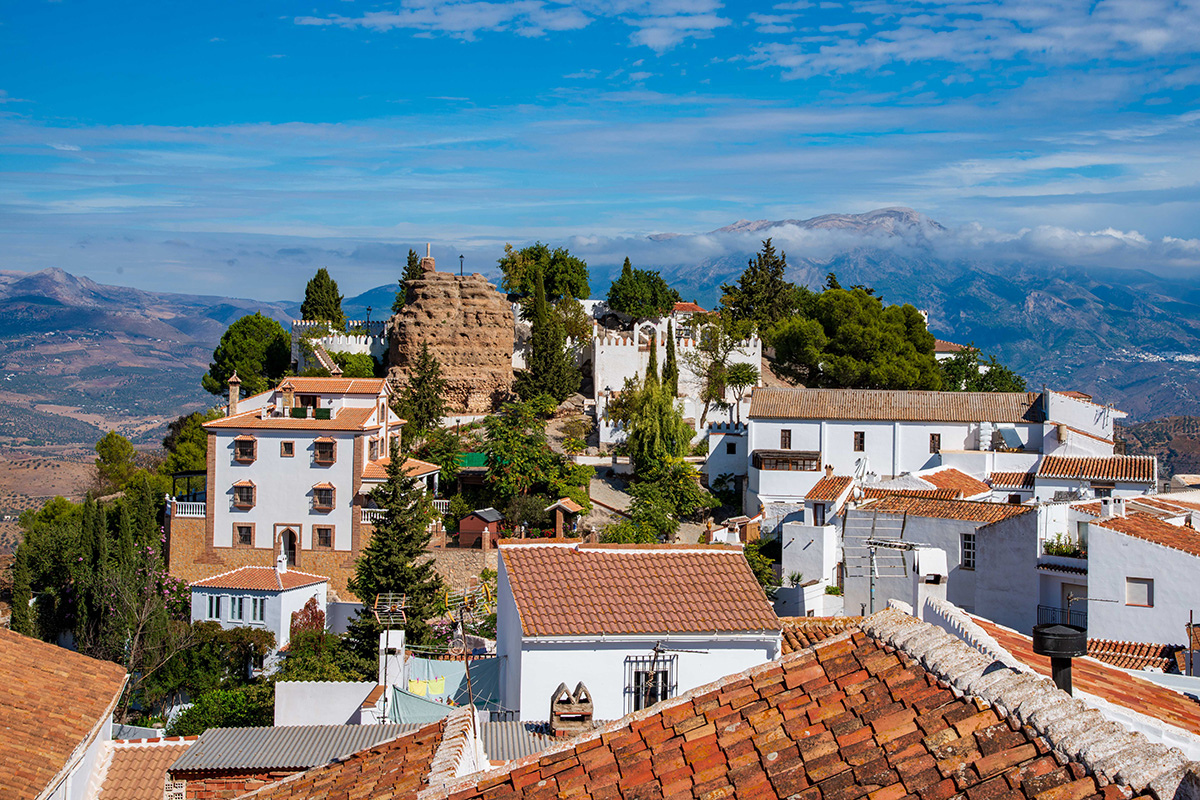
Long before we arrive in Comares, you'll probably find yourself looking towards it. Whether we're approaching from the coast or travelling through the northern part of the Axarquía, the town has a habit of drawing your attention. Its whitewashed houses line the crest of a narrow ridge, standing high above the surrounding countryside. From some angles, especially in bright sunshine, people have even mistaken the town for snow lying on the hilltop, while from others the contrast between the white buildings and the dark cliffs beneath makes it seem almost suspended above the valley.
It's an unforgettable sight, and you soon begin to wonder why generations of people chose to build a town in such a dramatic and exposed position. The spectacular views are part of the attraction today, but they weren't the reason people chose this remarkable ridge. This ridge offered something far more valuable. For centuries, whoever controlled Comares could watch over much of the western Axarquía, keeping an eye on the fertile valleys below, the routes through the mountains and the approaches from the coast.
As we walk towards Comares, we're not simply heading for one of Andalucía's most striking white towns. We're approaching a place whose position shaped its history, helping it become one of the most important fortified settlements in the Axarquía. Understanding why this ridge mattered over so many centuries adds another dimension to the walk, because once you appreciate the landscape through the eyes of the people who lived and defended it, Comares becomes far more than just another beautiful hilltop town.
(picture 1 here)
Why This Ridge?
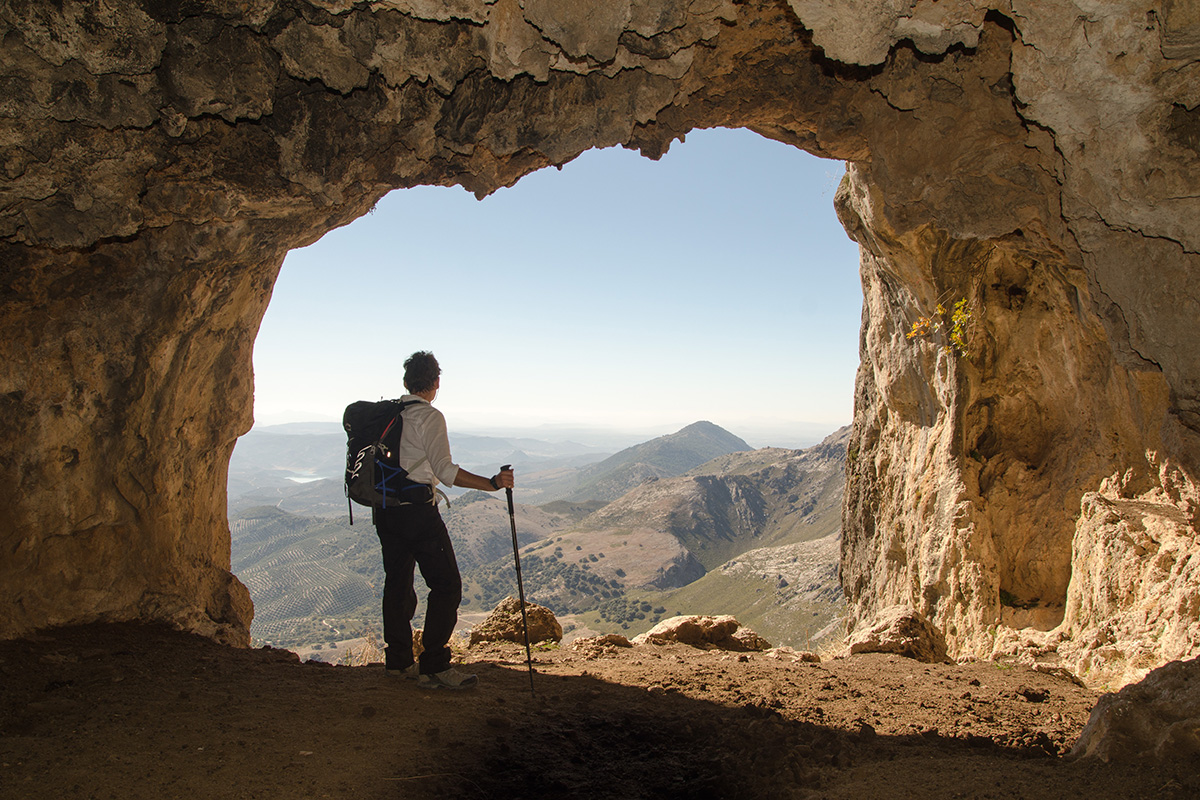
When you stand in Comares today, it's difficult not to spend a few moments simply looking. To the south, the land falls away towards the Mediterranean, while to the north the hills rise towards the mountains beyond. Between them lies much of the western Axarquía, a landscape of rolling hills, fertile valleys and ancient routes that have linked the coast with the interior for centuries. It's a view that naturally invites you to pause, and it's one of the reasons Comares leaves such a lasting impression on so many people who visit.
A thousand years ago, however, those same views meant something very different. They weren't admired simply for their beauty, but for the advantage they gave to the people who lived here. The steep slopes and rocky cliffs protected the town on three sides, while the narrow ridge provided the easiest approach. Anyone travelling through the surrounding countryside could be seen long before they reached Comares, giving those living here valuable time to prepare, whether they were welcoming traders and travellers or watching for something far less friendly.
Standing here today, the landscape almost explains itself. The position of the town wasn't chosen by chance, but because this commanding ridge offered security, visibility and control over a large part of the Axarquía. It was one of the reasons Comares became such an important fortified settlement, and the beginning of a wider story that stretched far beyond the town itself.
(picture 2 here)
Part of a Wider Defensive Network
Comares didn't stand alone. Across the Axarquía, other fortified settlements occupied equally commanding positions, each watching over a different part of the landscape. Together they overlooked a region of fertile valleys, established settlements and important routes linking the Mediterranean coast with the mountains and the lands beyond. Controlling this landscape meant controlling one of the most important parts of the region.
To the east stood Bentomiz, another hilltop fortress with extensive views across the eastern Axarquía and towards the coast. To the north, Zalia Castle overlooked the natural route through the Boquete de Zafarraya, one of the principal gateways between the Axarquía and the interior of Andalucía. Between these strongholds, watchtowers helped maintain lines of communication across the landscape, allowing information to pass quickly from one position to another.
Rather than thinking of Comares as an isolated fortress, it's better to see it as one part of a much larger system. Each stronghold watched over its own part of the Axarquía, helping to protect settlements, oversee important routes and maintain control across the region.
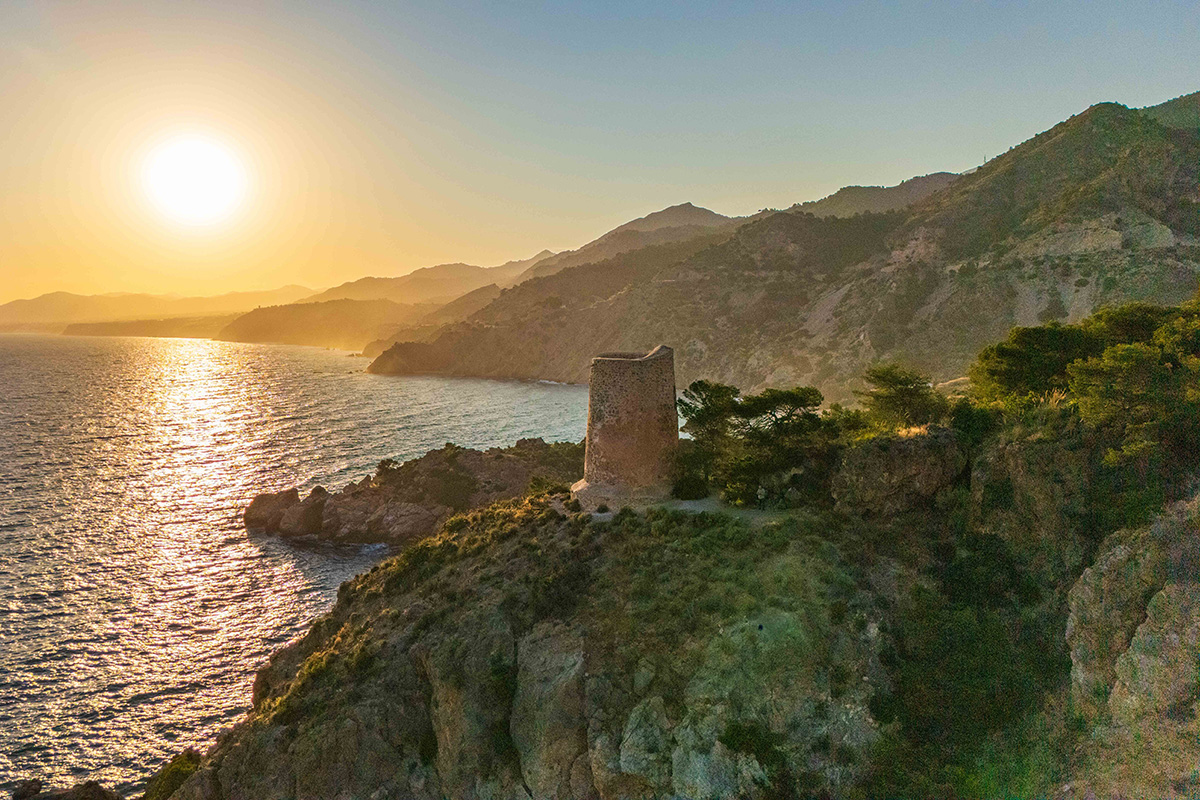
Today the castles are largely ruins, and the watchtowers no longer carry messages across the valleys. Yet from the ridge at Comares it's still remarkably easy to understand how the system worked. The hills haven't moved, the valleys remain the same, and the natural routes through the landscape are exactly where they've always been. Stand for a few moments and look across the Axarquía, and it's not difficult to imagine how this network of fortresses once watched over the countryside below.
(picture 3 here)
More Than a Fortress
Although Comares is remembered today for its fortress and commanding position, it was never simply a military outpost. It was a thriving town where people lived, worked and raised their families, supported by the fertile landscape that spread out below its walls. Fields were cultivated, livestock grazed on the surrounding hillsides, and goods moved between the coast and the inland settlements along routes that had been used for generations.
The surrounding countryside provided the food and resources that allowed communities like Comares to flourish. Olive trees, vines, figs and almonds have shaped this landscape for centuries, while the favourable climate of the Axarquía made the region one of the most productive parts of southern Andalucía. Protecting the town also meant protecting the people who lived here and the land that sustained them.
As we walk through Comares today, it's worth remembering that the narrow streets and whitewashed houses are part of a community that has continued to evolve over many centuries. The fortress may have lost its military purpose long ago, but the town remains a living place rather than an historic monument. People still live here, work here and look out across the same valleys that generations before them depended upon for their livelihood.
(picture 4 here)
Looking at Comares Differently
By the time we reach Comares, it's easy to admire the whitewashed streets, the spectacular views and the peaceful atmosphere that the town enjoys today. Yet once you understand why this remarkable ridge became such an important place, you begin to see far more than a beautiful hilltop town.
The cliffs, the valleys and the distant hills all become part of the story. What now feels like a peaceful place was once chosen because it offered security, visibility and control over a large part of the Axarquía. The landscape that makes Comares such a rewarding place to visit today is the very same landscape that shaped its history for centuries.
As we walk through the town and look out across the surrounding countryside, we're not simply enjoying one of Andalucía's finest viewpoints. We're standing in a place where the landscape still explains the past, provided we know what we're looking at.