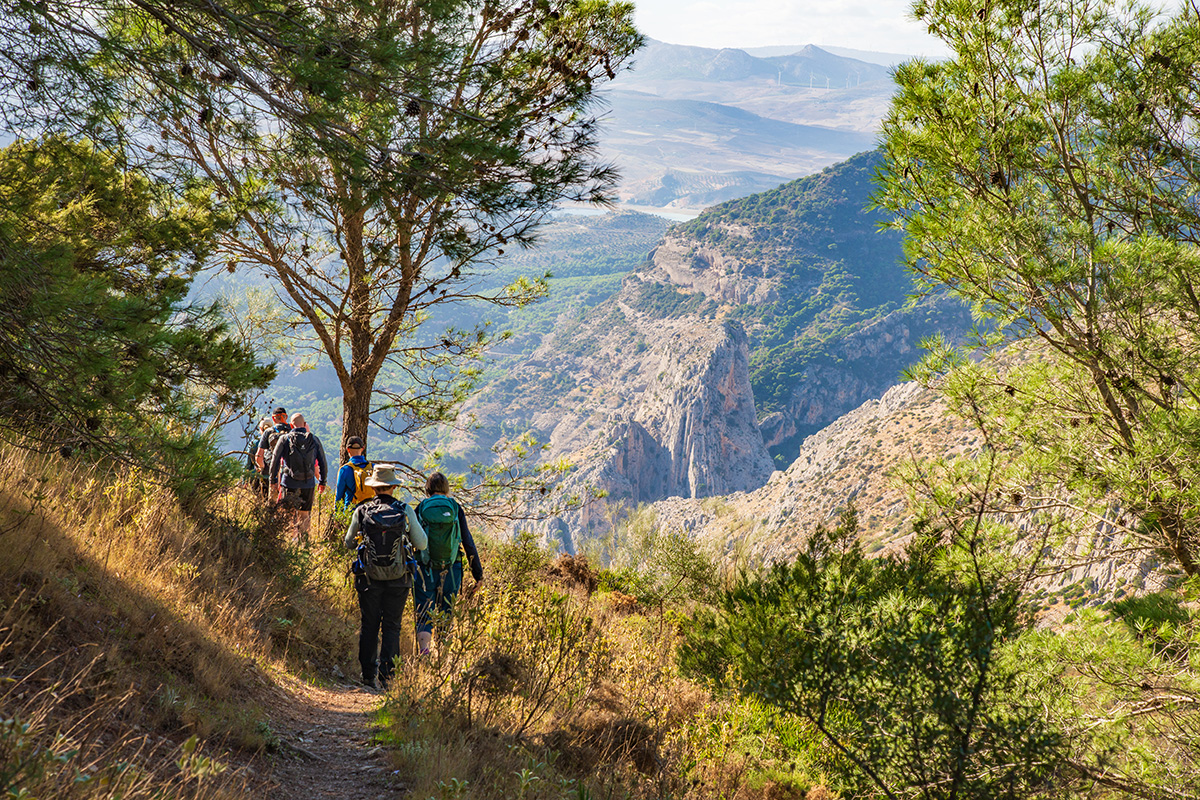
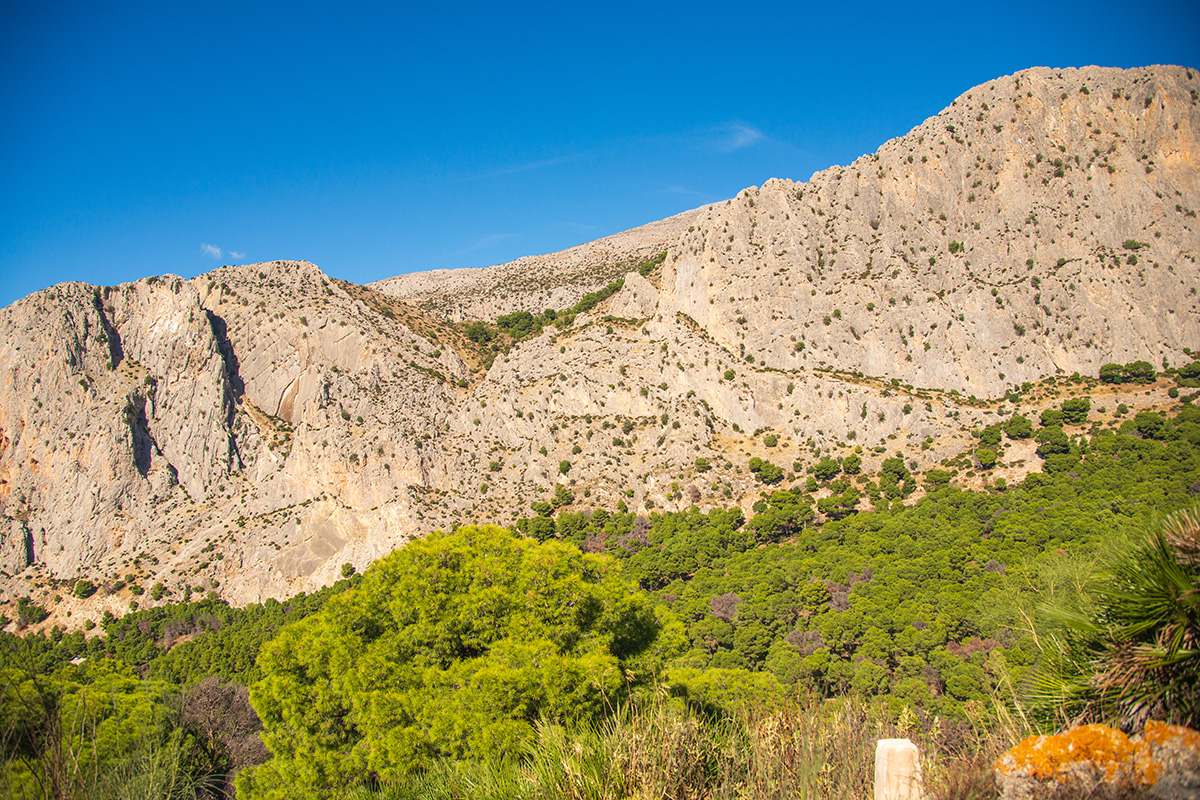
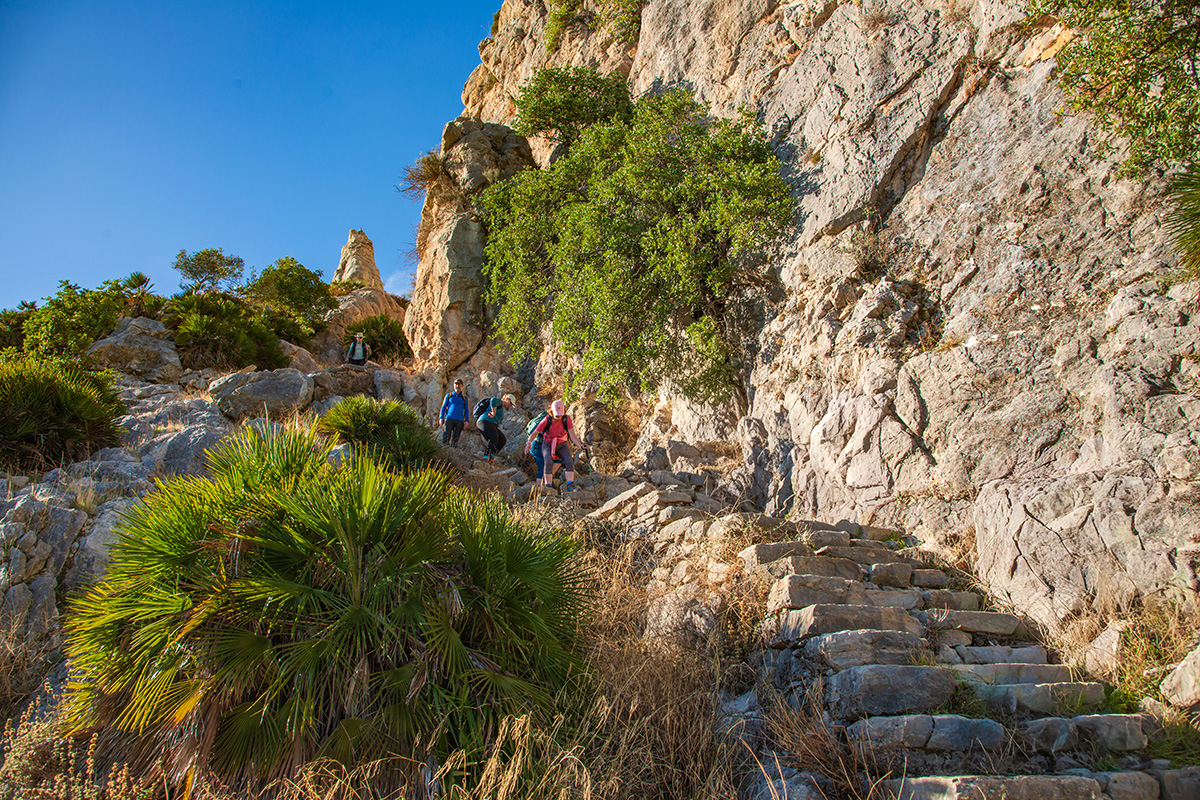
Above El Chorro, the limestone cliffs of the Sierra de los Castillejos form a natural barrier between the valley below and the higher ground of the Sierra de Huma. The Arabic Steps, known locally as the Escalera Árabe, provide a passage through these cliffs, following a natural break in the rock.
The staircase is an unusual piece of construction. Some steps are cut directly into the limestone, while others have been formed using local stone. Together, they create a practical route through a section of mountain that would otherwise be difficult to cross.
The surrounding geology helps explain why this particular passage was possible. Limestone formed from sediments deposited in ancient seas, then geological movements lifted, fractured, and tilted the rock. Over millions of years, erosion and the action of water exploited these weaknesses, creating the cliffs, gullies and natural openings we see today.
Whoever constructed the staircase recognised one of these natural openings and adapted it to provide access between the lower valley and the agricultural land above.
Who Built the Arabic Steps?
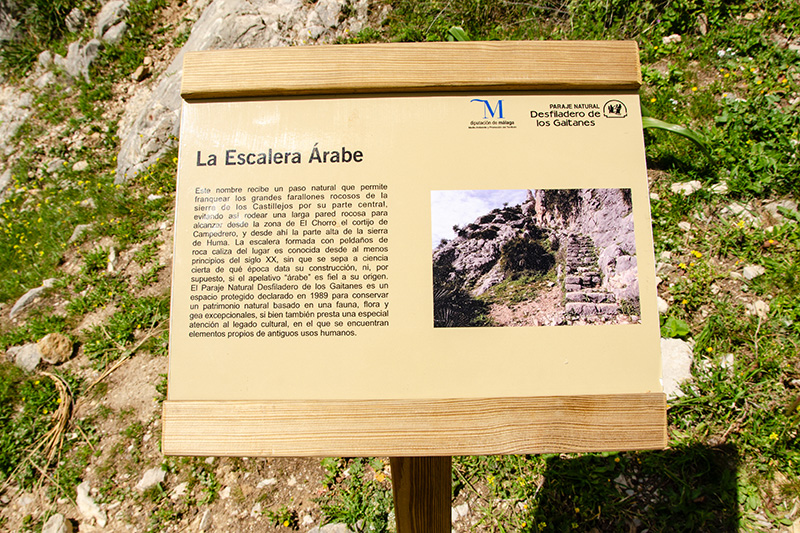
The name suggests an Arabic or Moorish origin, which is understandable given Andalucía’s history. However, there is no reliable evidence establishing when the staircase was built or who constructed it.
An official information board beside the steps, which I photographed in 2018, acknowledges this uncertainty. It explains that the name Escalera Árabe was already in use by the beginning of the twentieth century, but that neither the construction date nor the supposed Arabic origin can be confirmed.
Several explanations have been suggested over the years. One associates the staircase with the hydroelectric developments around El Chorro in the early twentieth century. Another attributes its construction or modification to forestry and reforestation work during the middle of the century. It is also possible that the passage existed long before either of these activities.
None of these explanations has yet been supported by a contemporary construction record. It is quite possible that an older route was improved or repaired over time, although we cannot establish whether this happened.
What is clearer is the staircase’s practical function. It provided access between El Chorro and agricultural holdings on the higher slopes, including the area around Cortijo de Campedrera. Understanding how people used that land helps explain why such a passage would have been valuable.
A Landscape That Once Worked
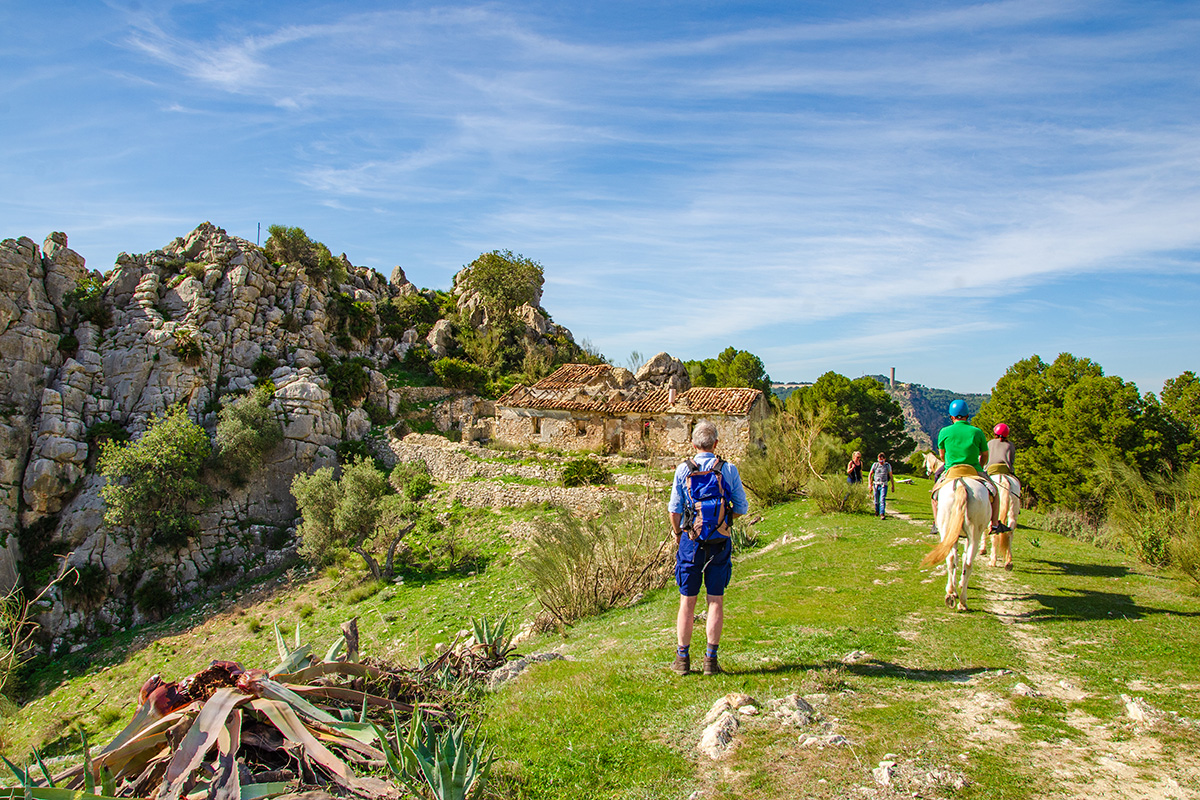
Today, much of the land around the Arabic Steps appears remote and relatively undisturbed. However, the remains of old farmhouses, agricultural terraces, and threshing floors show that people once worked these mountains actively.
On this walk, we come across an old farmhouse with three stone threshing floors nearby. These circular areas, known as eras, were traditionally used to separate grain from the harvested crop. Animals would pull a threshing implement around the prepared surface, loosening the grain so that it could be separated from the straw and chaff.
There is also another isolated threshing floor farther up the mountain. Together, these remains provide evidence that crops were cultivated, harvested and processed on land that today seems an unlikely place for agriculture.
Near the farmhouse, I met an elderly local man who remembered using the Arabic Steps with his brother when they were younger. He explained that they travelled through the passage to reach agricultural land around Tajo del Estudiante, bringing hay down from the higher ground.
He also told me how the grain was dealt with after threshing. Someone would come up into the mountains with mules, collect the wheat and take it down to Álora to be milled. The flour would then be brought back to the families who had grown the grain.
What I particularly remember was his explanation of how his grandfather paid the molinero, or miller. Rather than paying him in money, his grandfather paid him in bread.
The threshing floors were part of a wider system involving farming, transport, milling and the exchange of goods and services. For the man I met, the Arabic Steps were simply a practical way of reaching the land where he and his brother worked.
His recollections don’t establish when the staircase was constructed, but they do give us a first-hand account of its agricultural use within living memory.
Farther north, at the top of Tajo del Estudiante, stands Cortijo de Campedrera, a separate agricultural property mentioned in connection with the historic passage through the cliffs. Its location helps explain how the Arabic Steps provided access to the agricultural holdings scattered across the higher ground.
From Working Mountains to Protected Landscape
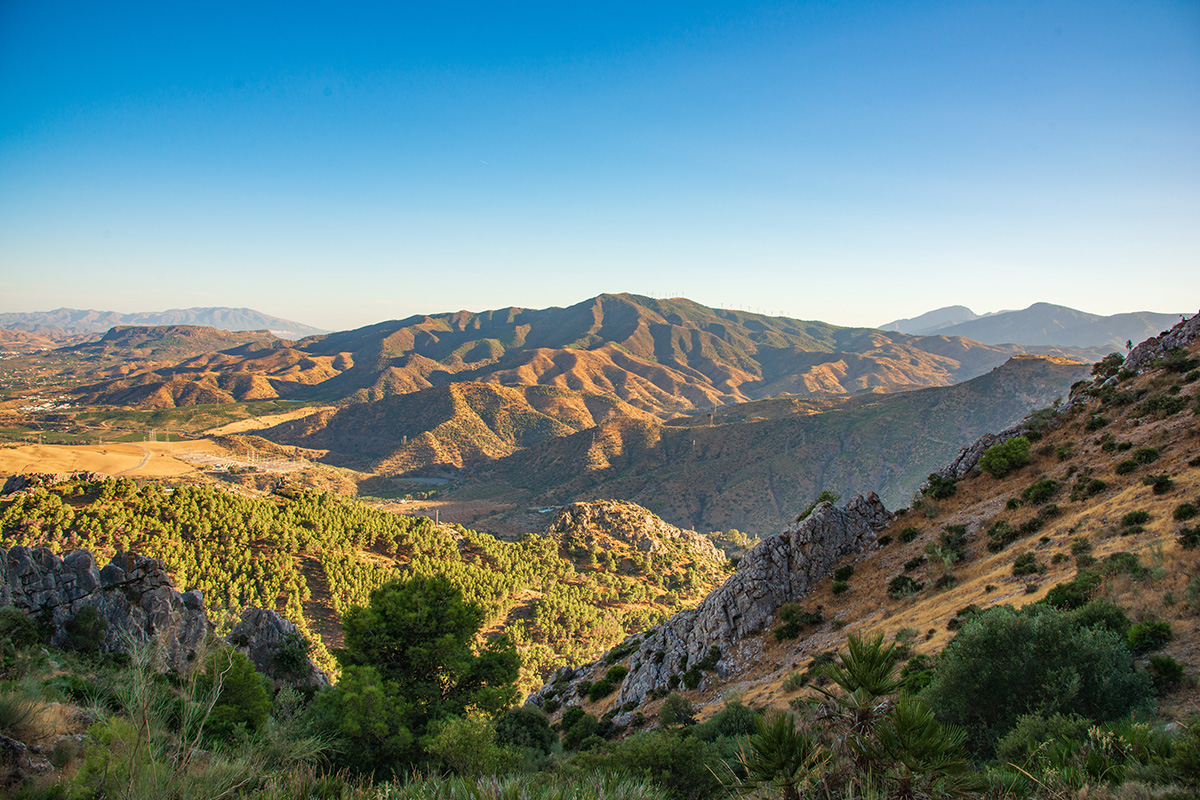
The landscape around El Chorro has changed considerably as traditional agricultural activity has declined. Formerly cultivated areas have gradually been reclaimed by natural vegetation, while parts of the surrounding slopes are now covered by pine woodland.
Some of these pine forests resulted from reforestation programmes intended to restore vegetation and reduce erosion. Their presence also helps explain why forestry work has been suggested as one possible period during which the staircase may have been modified, although no documentary connection has yet been established.
Old tracks, terraces and abandoned agricultural buildings remain visible in places, providing evidence of earlier land use. The threshing floors are particularly interesting because they show that grain was not only grown in these mountains but also processed there.
In 1989, the Desfiladero de los Gaitanes was declared a protected natural area, recognising the importance of its geology, wildlife and landscape. The limestone cliffs around El Chorro have since become well known for rock climbing, while the Arabic Steps have become a popular feature of local walking routes.
The passage's purpose has therefore changed. What was once a practical means of reaching agricultural land is now used mainly for recreation, although its position still reflects the same geological constraints that influenced the people who originally used it.
What the Steps Still Tell Us
We may never establish exactly when the Arabic Steps were constructed. Their name suggests one possible origin, while later accounts point towards hydroelectric engineering or forestry work. Without reliable historical records, none of these explanations can be accepted as definitive.
What we can understand more clearly is the landscape the staircase served. The surviving threshing floors, abandoned agricultural buildings and recollections of people who worked the land show how important access through these mountains once was.
For me, the conversation with the elderly man brought that history into focus. The staircase that walkers now stop to photograph was once part of an ordinary working day, used to reach fields and bring agricultural produce down from the mountains.
That connection between the physical landscape and the people who worked within it is what makes the Arabic Steps particularly interesting. Even without a confirmed construction date, they provide a valuable reminder of how people once lived and worked in the mountains above El Chorro.