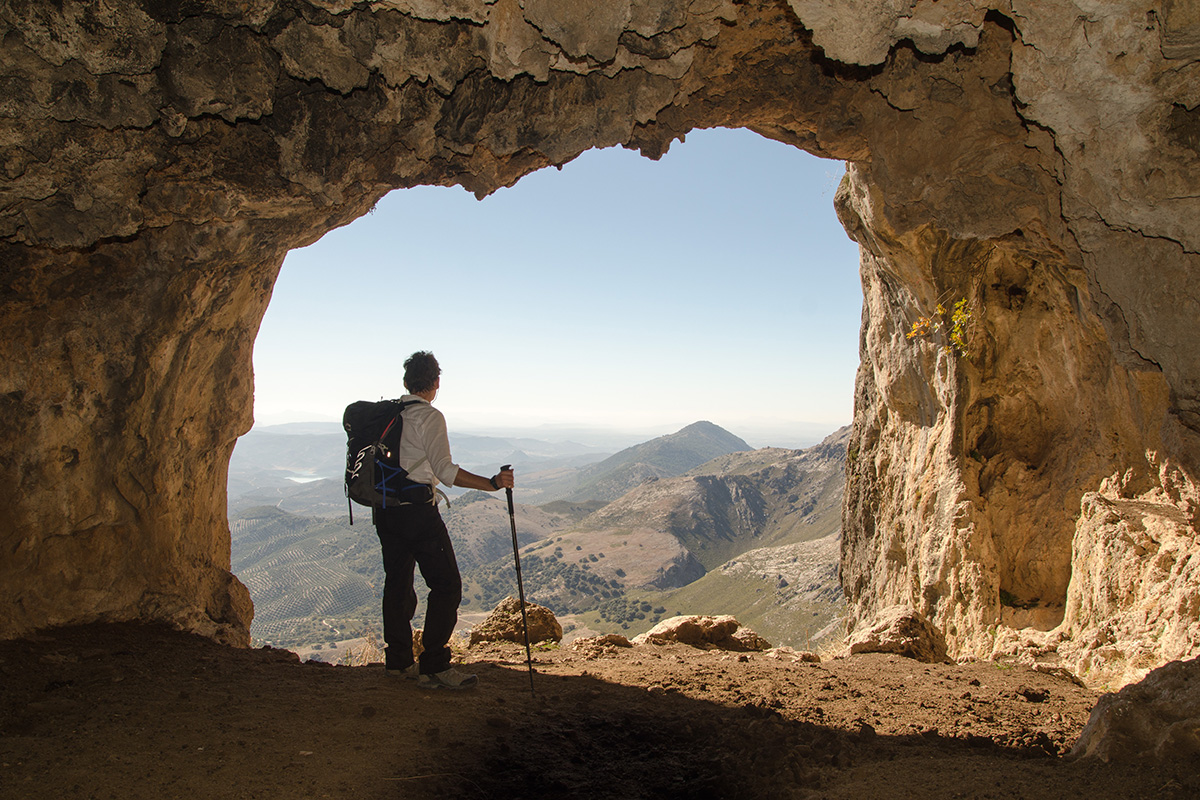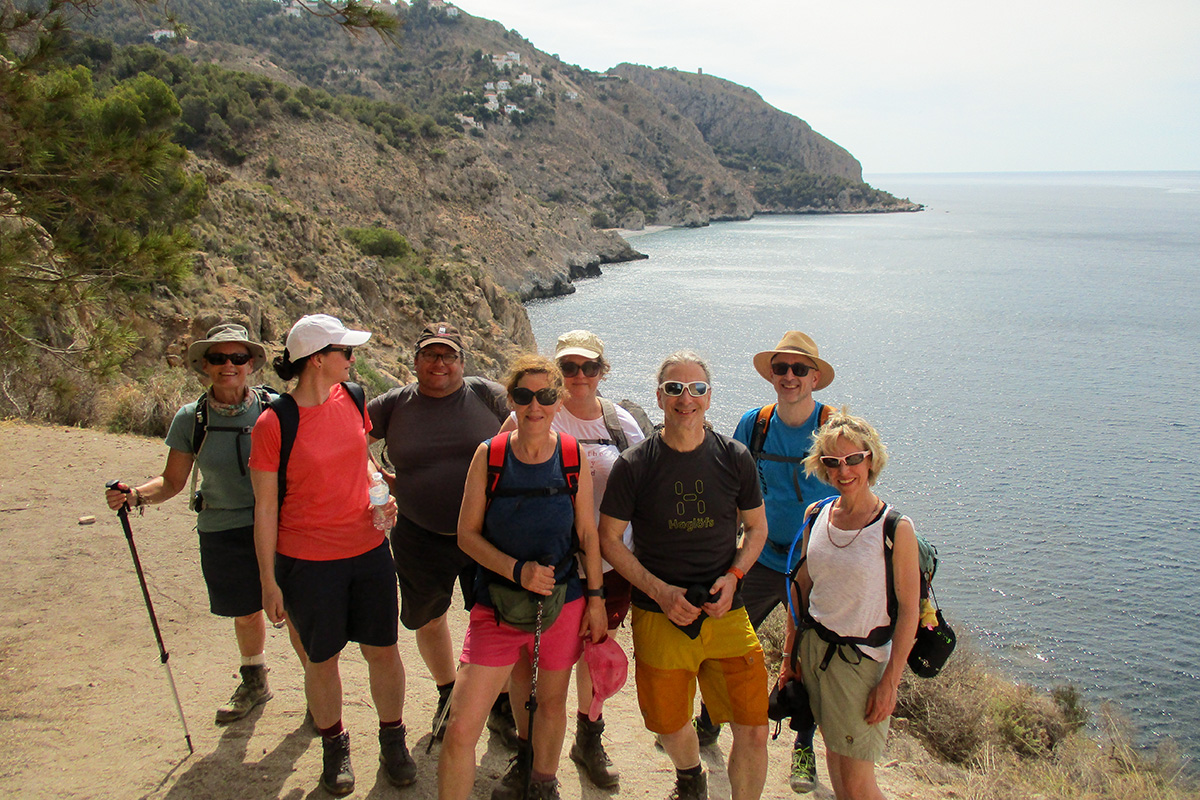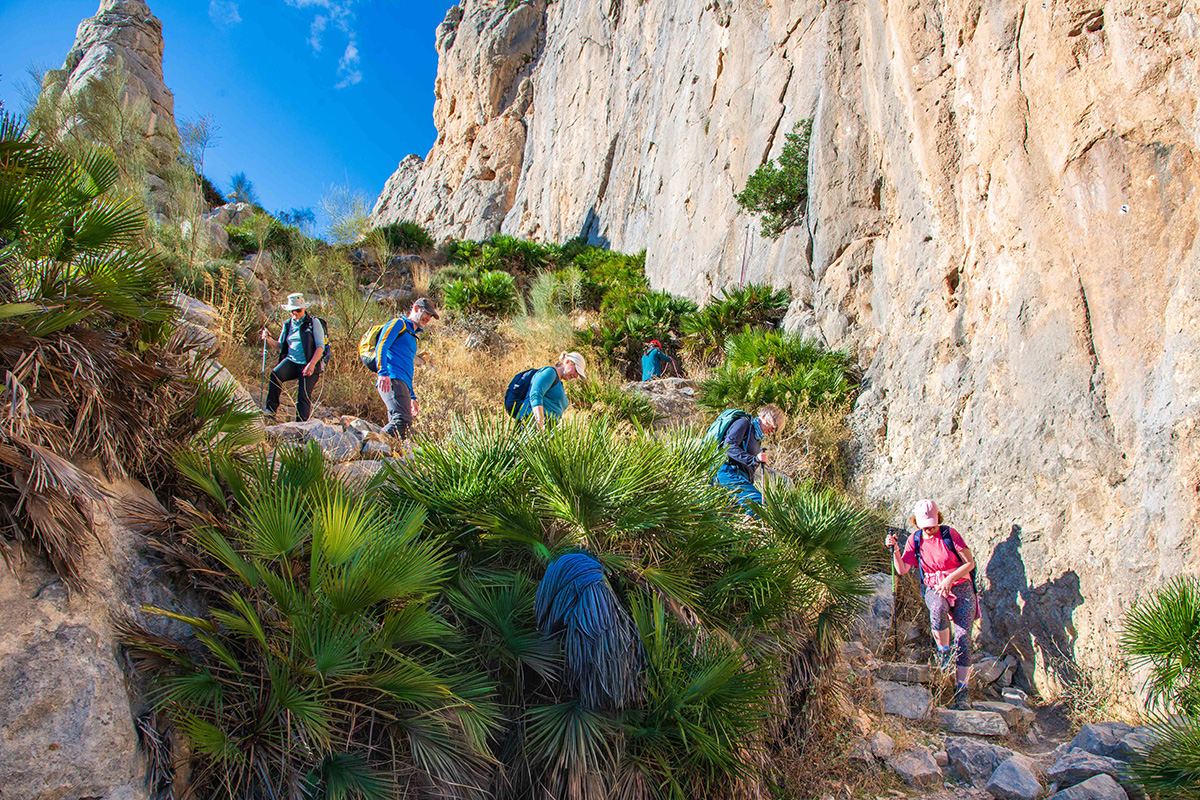
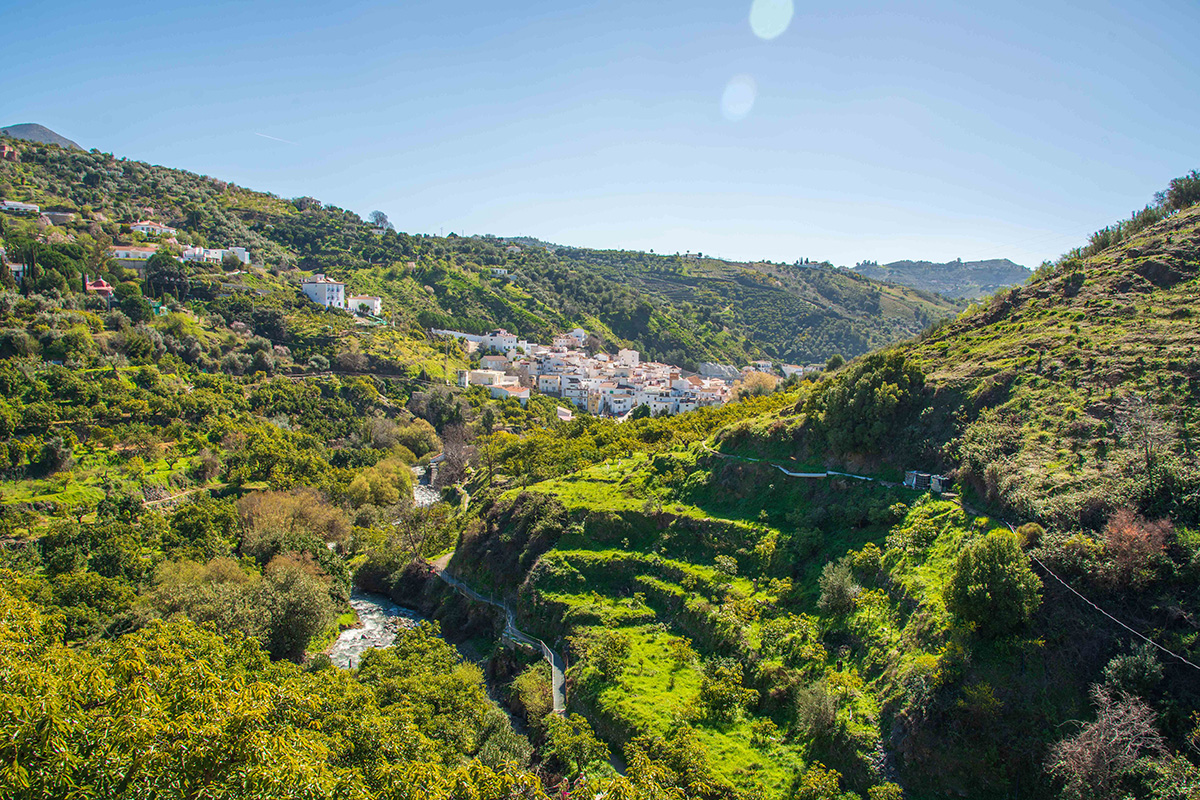
I've walked this route between Canillas de Albaida, Árchez and Cómpeta many times, gradually changing it as I've explored different paths and learnt more about the landscape around it. What surprised me was just how much there was within such a small area. In little more than nine kilometres, we pass old paths and bridges, irrigation channels, mills, agricultural terraces and a threshing floor, as well as three white villages.
The more often I've walked here, the more I've realised that these aren't simply interesting features scattered along the route. Together, they tell the story of how generations of people have lived in this part of the Axarquía. Routes have been reused, buildings adapted, water channelled across the hillsides and old terraces given new crops. Each generation has inherited something from the one before, leaving traces that are still visible along the paths we walk today.
Paths People Have Followed for Centuries
Canillas de Albaida gives us an early glimpse of just how many layers of history sit within this landscape. The Santa Ana hermitage occupies a site with a much older story, associated with an earlier fortification and referred to in a 16th-century document as the castle of the village. Nearby, an old acequia crosses the hillside, one of the irrigation channels that once carried water from the mountains towards the cultivated land below.
The old stone paths provide another clue. Below Canillas, one descends towards the Río Turvilla and crosses the stream on an historic bridge. Both are traditionally known locally as Roman, although their precise origins are uncertain. Historical research suggests medieval origins, with the bridge altered and rebuilt over the centuries. What we do know is that this was once a working route towards Vélez-Málaga, long before anyone thought of walking it for pleasure.
That matters more than being able to attach an exact date to every stone. The villages of the Upper Axarquía were not isolated communities tucked away amongst the mountains. People travelled between them and onwards towards the coast, carrying goods and maintaining connections with the wider region. The paths we walk today are part of that inherited landscape, reused and adapted just like so much else we'll encounter here.
(picture 1 here)
Making Water Work
An old acequia running across a hillside can be surprisingly easy to overlook. Some of the channels we see no longer carry water, but they are reminders of one of the most important challenges faced by the people who settled these slopes: how to bring water from its source in the mountains to the places where it was needed.
The principle was simple: use gravity to carry water across the hillside. Achieving it across this landscape was anything but. During the centuries of Muslim rule, sophisticated irrigation systems were developed and extended throughout Al-Andalus. Following a gentle gradient across the contours of the land, acequias carried water from its source towards settlements and cultivated slopes, making agriculture possible where rainfall alone couldn't be relied upon.
What I find particularly interesting is that these channels make more sense when you look beyond the acequia to the landscape around it. The mountains provided the water, but generations of people worked out how to move it across the hillsides and put it to use. Later in the walk, old terraces and another section of acequia show how closely water and agriculture became connected. The crops may have changed over time, but the landscape created to grow them is still very much with us.
(picture 2 here)
When One Culture Became Part of Another
Árchez gives us one of the clearest examples of how the different periods of the Axarquía's history overlap. Standing beside the village church is a tower that looks quite different from the Christian buildings around it. That's because it wasn't originally built as a bell tower. It was the minaret of a mosque, constructed during the centuries of Muslim rule and later incorporated into the Christian church.
It's a wonderful example of something we'll encounter repeatedly across Andalucía. When Christian rule replaced Muslim rule, everything that had gone before wasn't simply swept away. Buildings and existing structures were adapted and reused, while Islamic architectural traditions continued to influence what was built under Christian rule, creating the distinctive Mudéjar style found across this part of Andalucía.
I think the tower at Árchez is particularly interesting because you don't need to know very much about architecture to understand what you're looking at. The change is there in front of you: a minaret that once called Muslims to prayer becoming part of a Christian church. Centuries of political, religious and cultural change are contained within a single building, while the village has simply continued to grow and live around it.
(picture 3 here)
A Landscape Made for Work
Much of what we now regard as the traditional landscape of the Axarquía was created through work. Hillsides were terraced, water was channelled towards crops, mills processed what was grown, and threshing floors provided places where grain could be separated from the harvest. These weren't features created to make the countryside attractive; they were practical solutions to the everyday business of making a living from difficult land.
Traces of that working landscape appear throughout this walk. We pass an old mill and a traditional threshing floor, while terraces step across slopes that have been cultivated for generations. Some old olive trees remain, but elsewhere the crops have changed. Mangoes and avocados, now such a familiar sight in the Axarquía, occupy land shaped by people who could never have imagined what would eventually be grown there.
For me, those terraces are one of the best examples of what makes this landscape so interesting. The agriculture isn't frozen at some convenient point in history. It continues to change as each generation finds different ways to use the land it has inherited. The crops may be relatively new, but beneath them are terraces, water channels and patterns of cultivation created long before they arrived.
(picture 4 here)
A Living Landscape
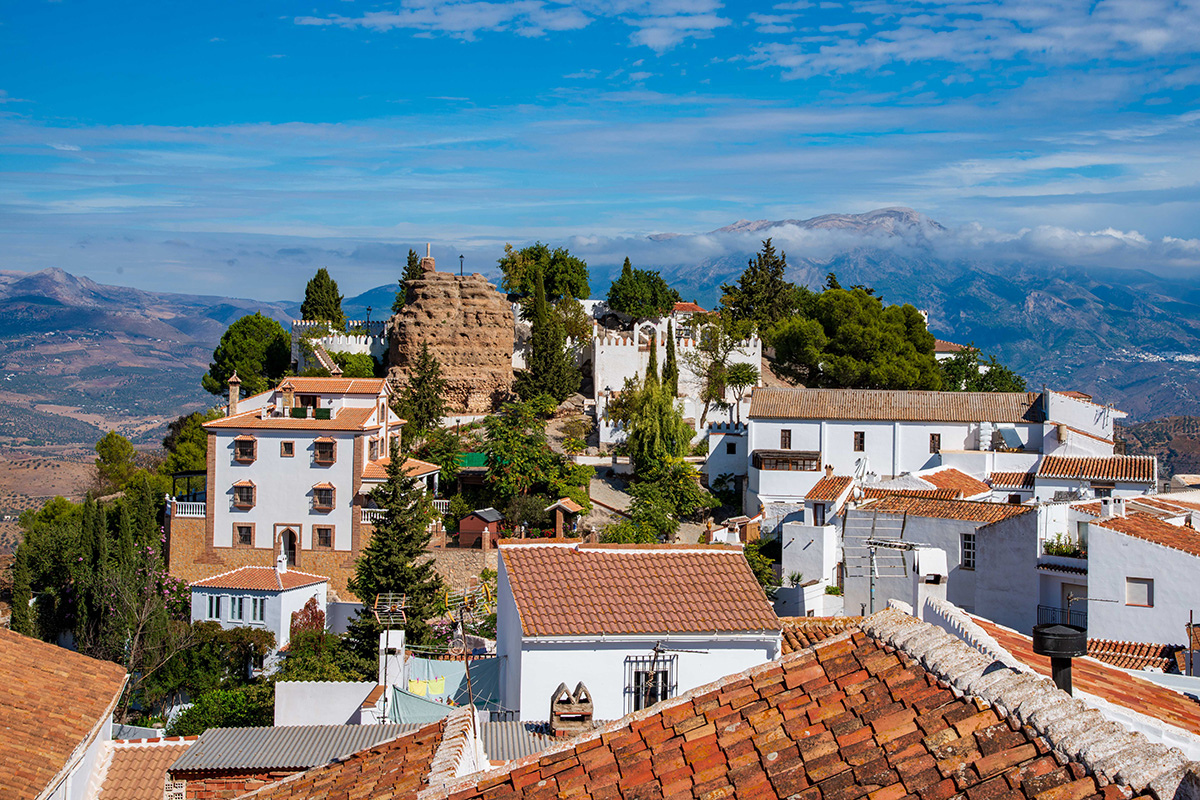
Cómpeta provides a fitting contrast to much of what we've encountered. Old paths, irrigation channels, mills and threshing floors can make us think of this landscape in terms of its past, but the towns and villages of the Axarquía have never stopped changing. People still live and work here, adapting old buildings and streets to modern life while retaining much of the character created by generations before them.
Its white houses spread across the hillside, while the older part of town still follows a maze of narrow streets shaped long before cars became part of everyday life. At its centre, the plaza and church remain part of the life of the town rather than simply historical features preserved for visitors.
And perhaps that's why stopping here for tapas feels like such a natural part of the walk. After spending much of the day noticing how people lived and worked in this landscape in the past, we're suddenly sitting in the middle of how it's lived in today. The surroundings may carry centuries of history, but Cómpeta isn't a museum. It's a working Andalusian town where the past remains part of everyday life.
(picture 5 here)
Seeing What Was Already There
When I first walked this route, I enjoyed it without fully appreciating how much of the Axarquía's story was sitting quietly around me. It was only by returning and learning more about what I was seeing that the individual pieces began to fit together.
That's perhaps what I now enjoy most about this walk. The history isn't contained within one castle, church or archaeological site. It's spread across the landscape in old paths, irrigation channels, buildings, terraces and villages, each revealing something about the people who lived here and how they adapted the land.
None of those layers exists entirely on its own. Routes have been reused, buildings given new purposes and old terraces planted with new crops. What we see today is the result of generations inheriting what came before and adding something of their own. Once you begin to recognise those layers, a relatively short walk through this small corner of the Axarquía becomes a very different way of understanding the region.
(picture 6 here)